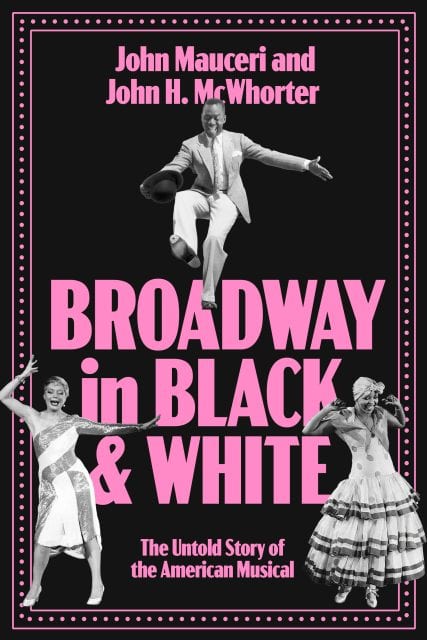
John Mauceri’s forthcoming book, written with linguist and cultural commentator John H. McWhorter, offers a provocative new interpretation of how the American musical — and, in many ways, American culture itself — came to be.
John argues that Broadway grew from the remarkable interaction of two musical traditions: African American forms — including spirituals, blues, ragtime, jazz, gospel, and rhythm — and European operetta and classical traditions brought by composers and immigrants. These influences mingled with minstrelsy, vaudeville, and other popular forms to create what the authors call a “dazzling cauldron of influences.”
Tracing the story from the late nineteenth century through Broadway’s Golden Age to The Lion King and Hamilton, Mauceri and McWhorter highlight the often-underappreciated contributions of Black music and artists. They also make a larger claim: Broadway did not simply reflect America’s racial history — it helped change it. Long before integration became the law, Black and white artists were creating and performing together before diverse audiences. Musicals challenged prejudice and stereotypes and gave Americans a glimpse of a more integrated society.
John Mauceri brings a particularly rare perspective to this story. After decades conducting Broadway scores, opera, film music, and symphonic works, he can explain not only what happened but how the music itself works—and why it mattered. His extraordinary musical knowledge and gift for making complex ideas accessible make this much more than a history of Broadway. This story is one John Mauceri is uniquely equipped to tell.
Ultimately, Broadway in Black & White presents the musical as a metaphor for America itself: imperfect and conflicted, but transformed by the creative interaction of cultures once separated by race and circumstance.
The book will be released on November 3, published by W. W. Norton.